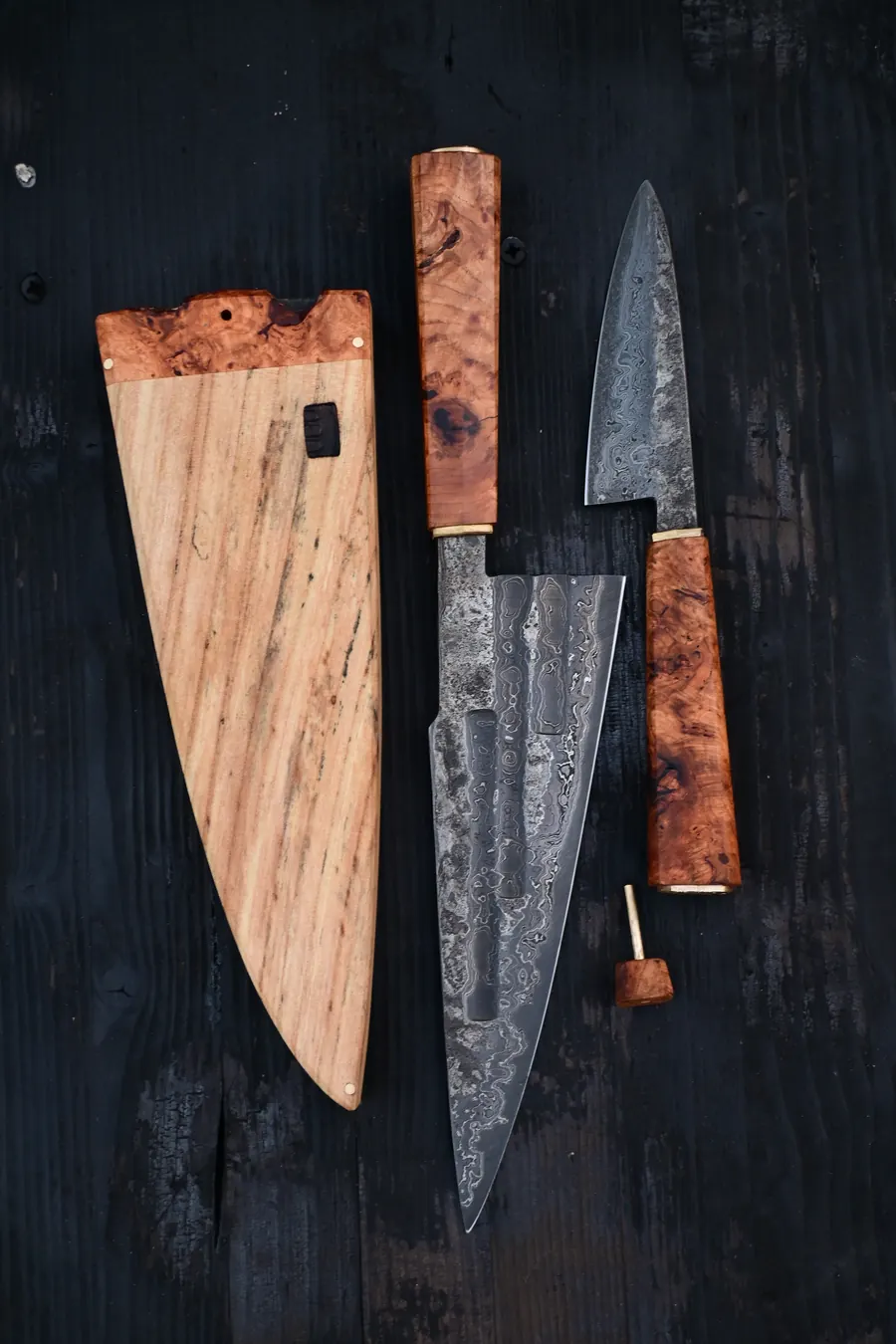
Vorančeva kovačija – hand-forged kitchen knives by tradition
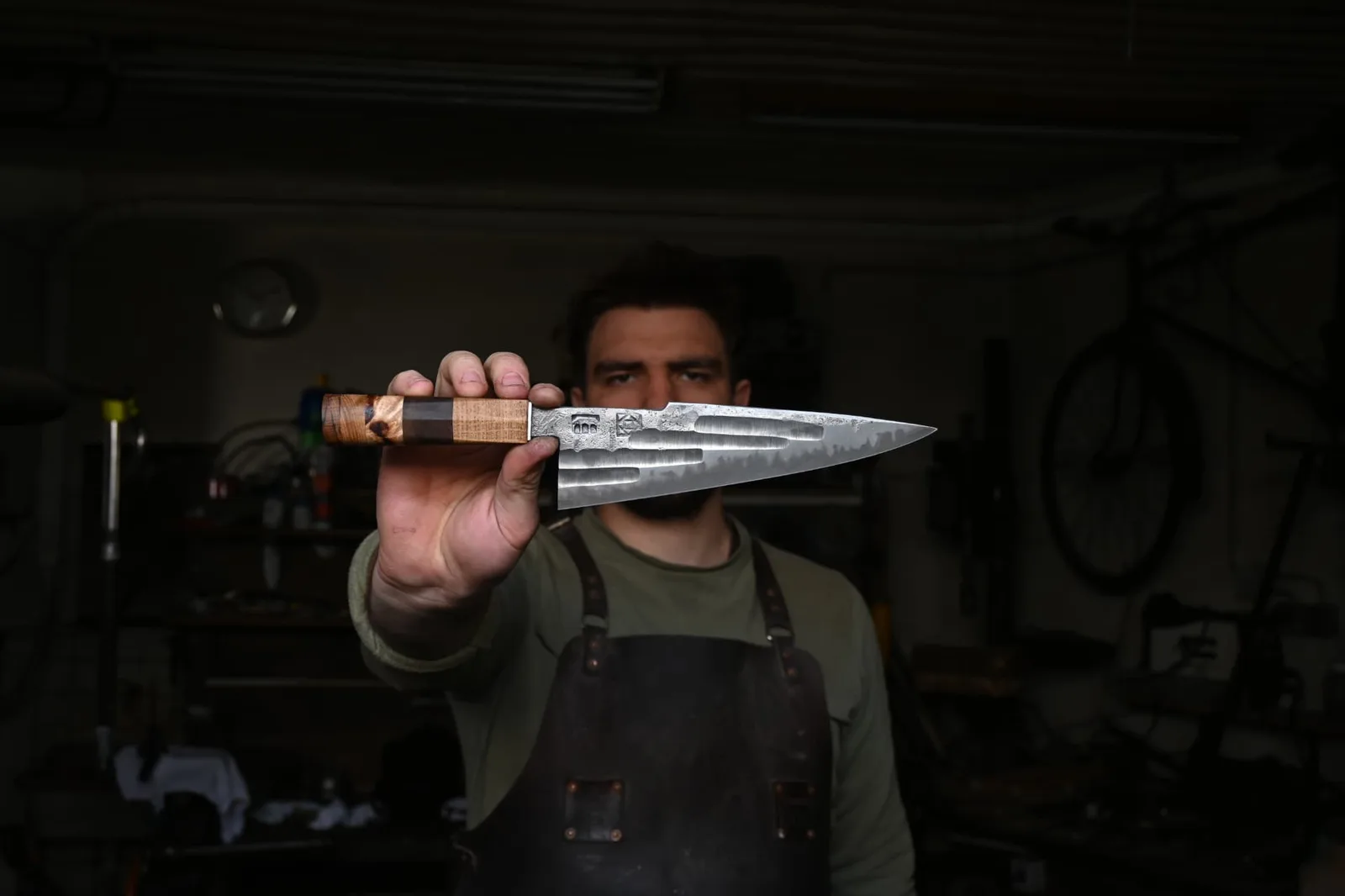
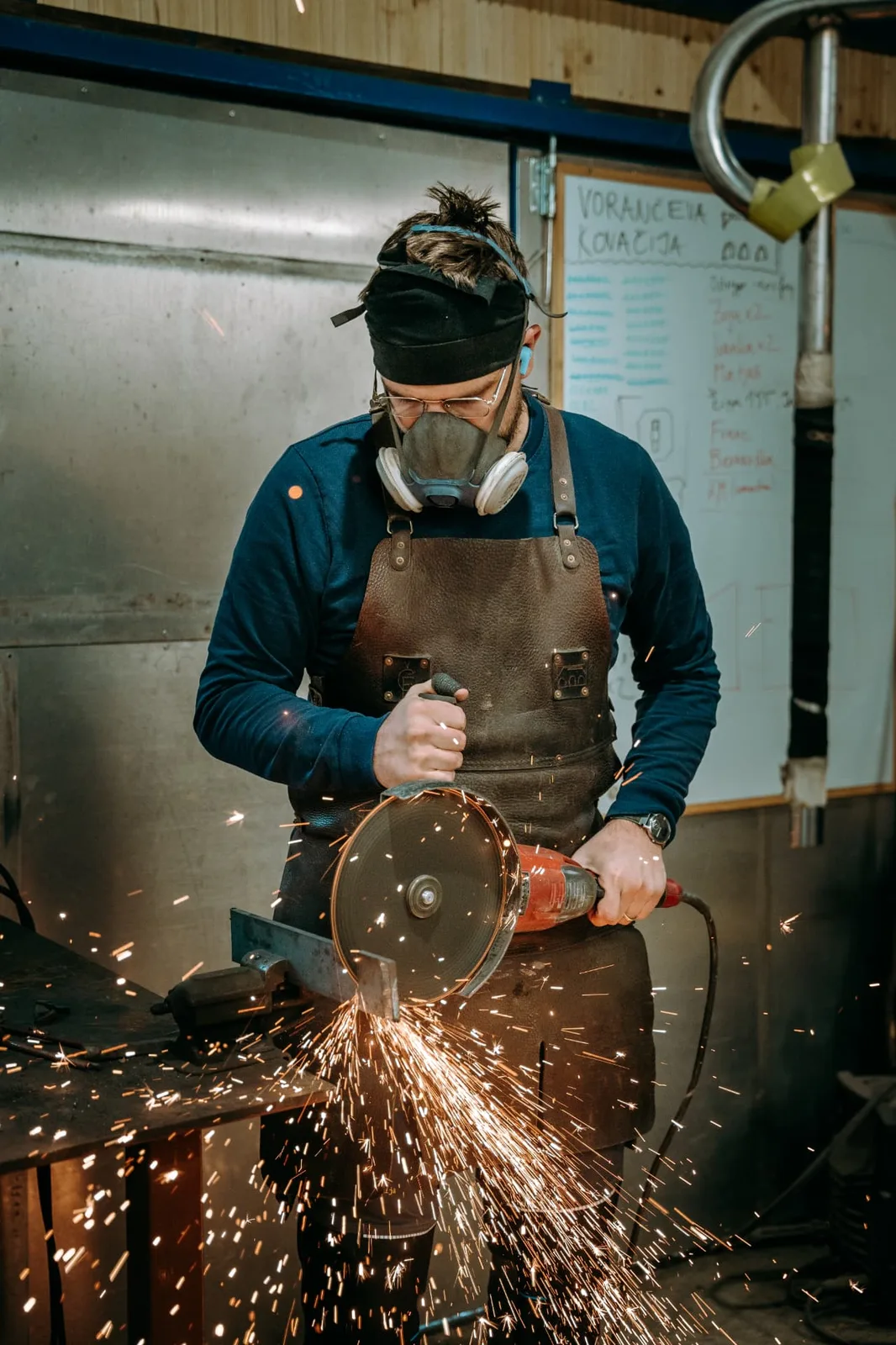
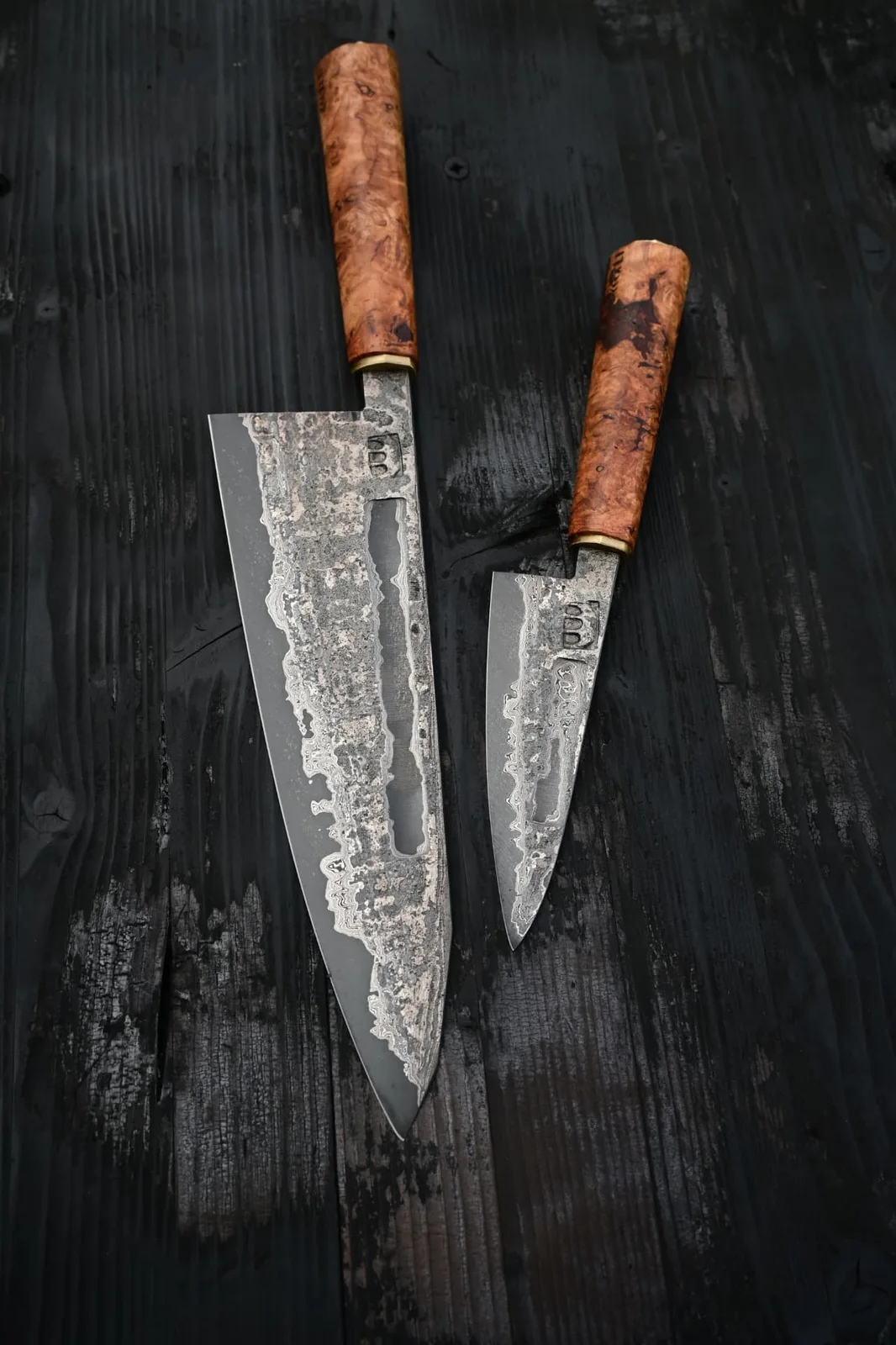
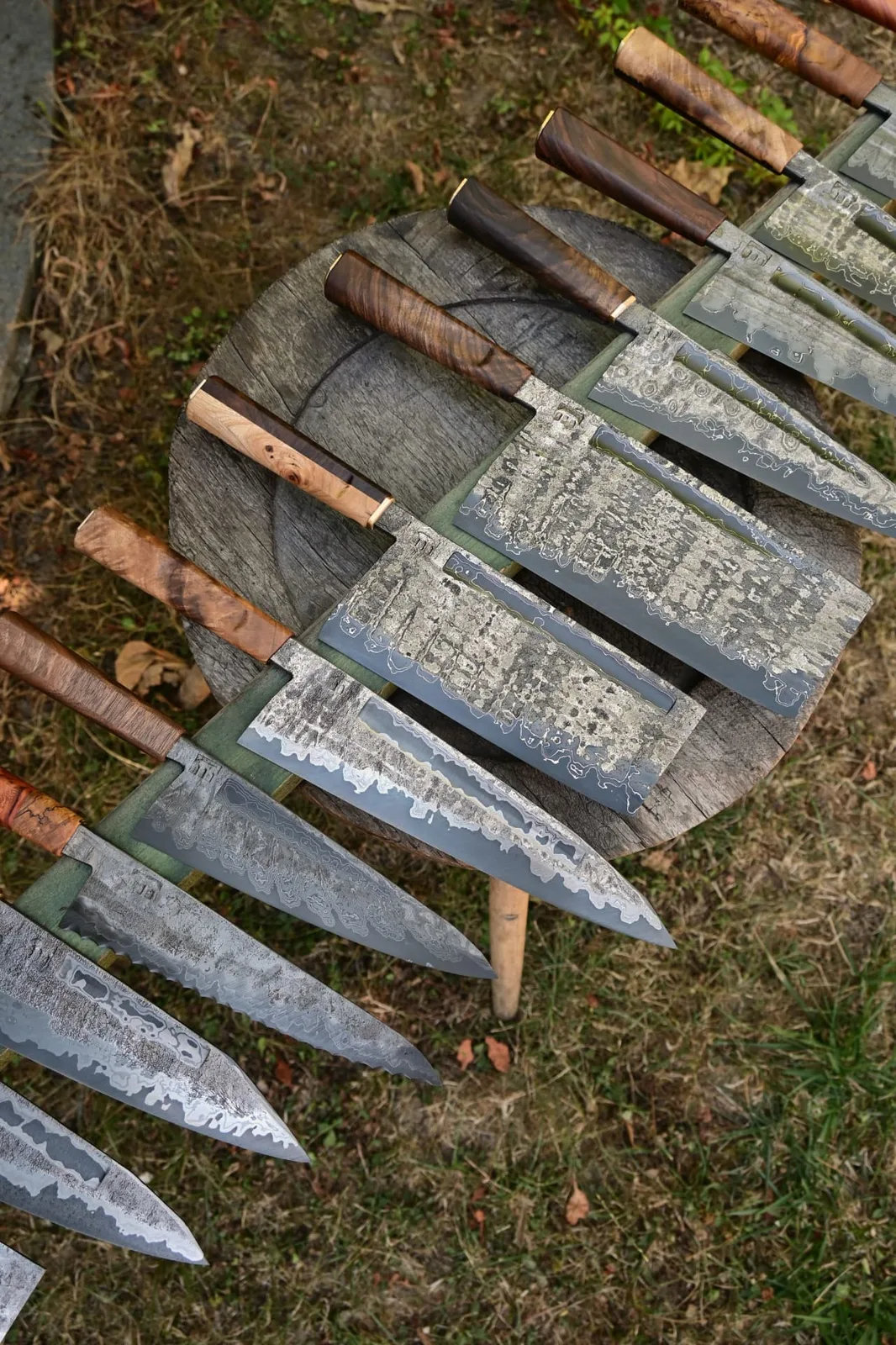
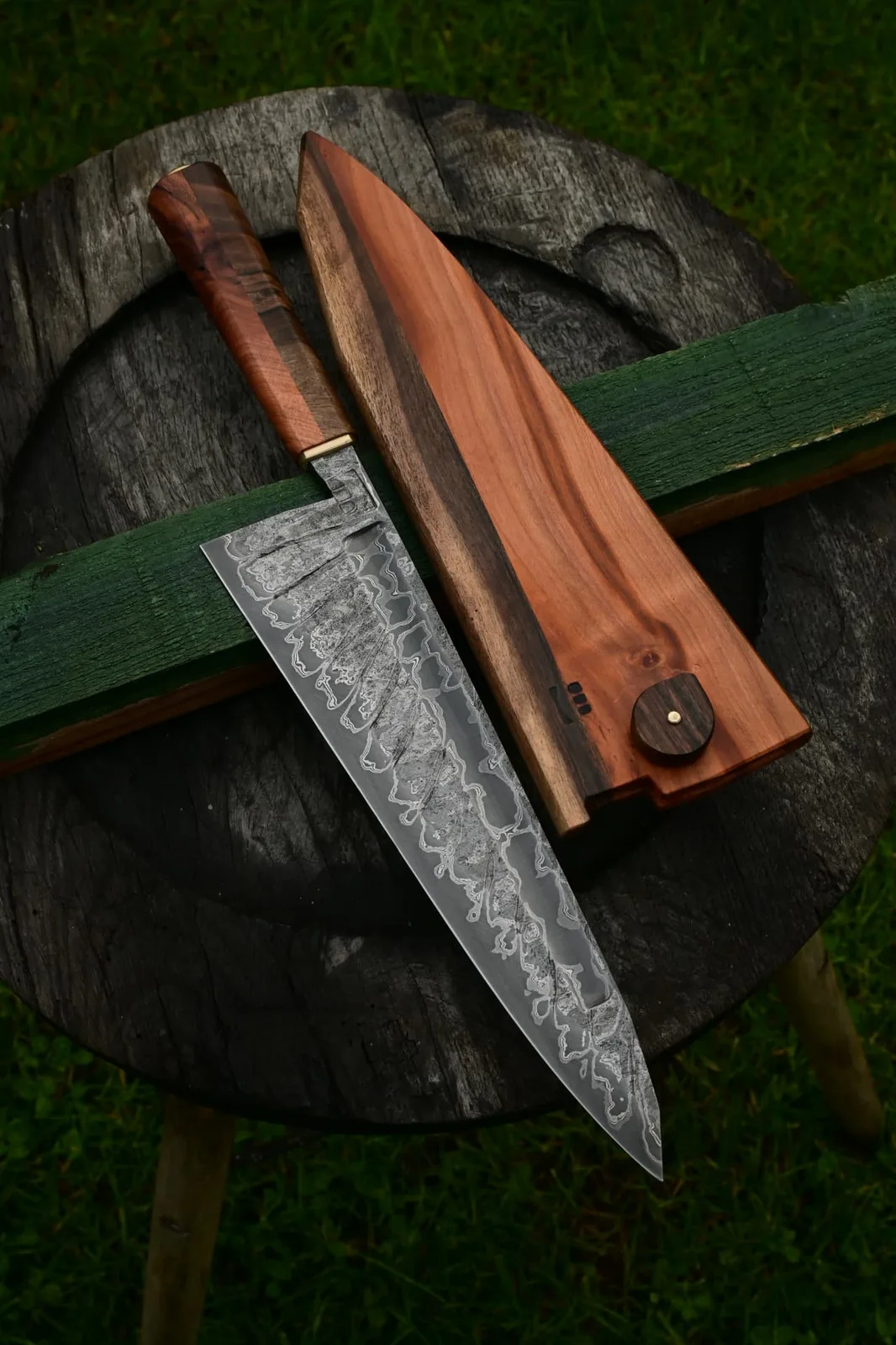
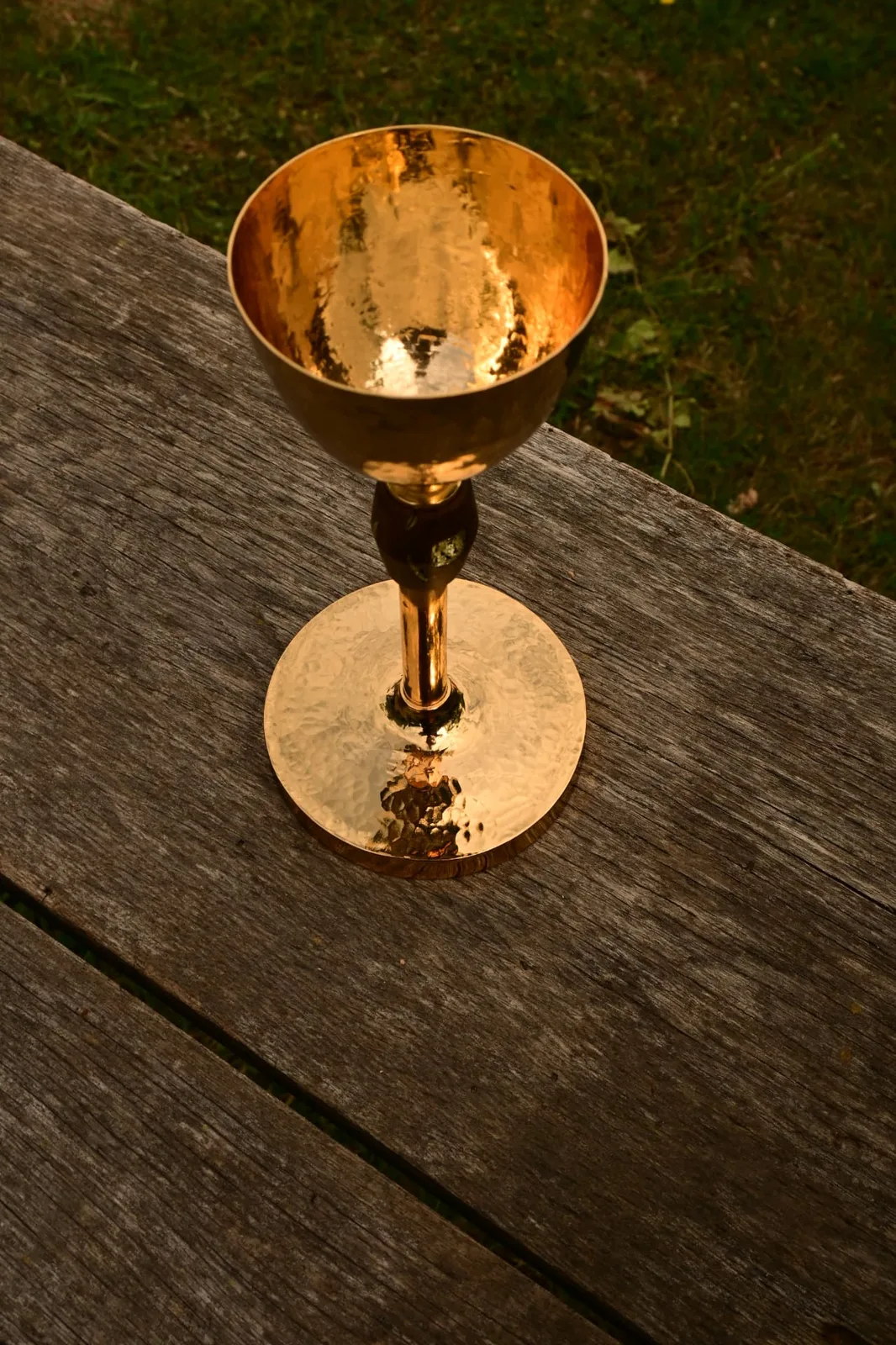
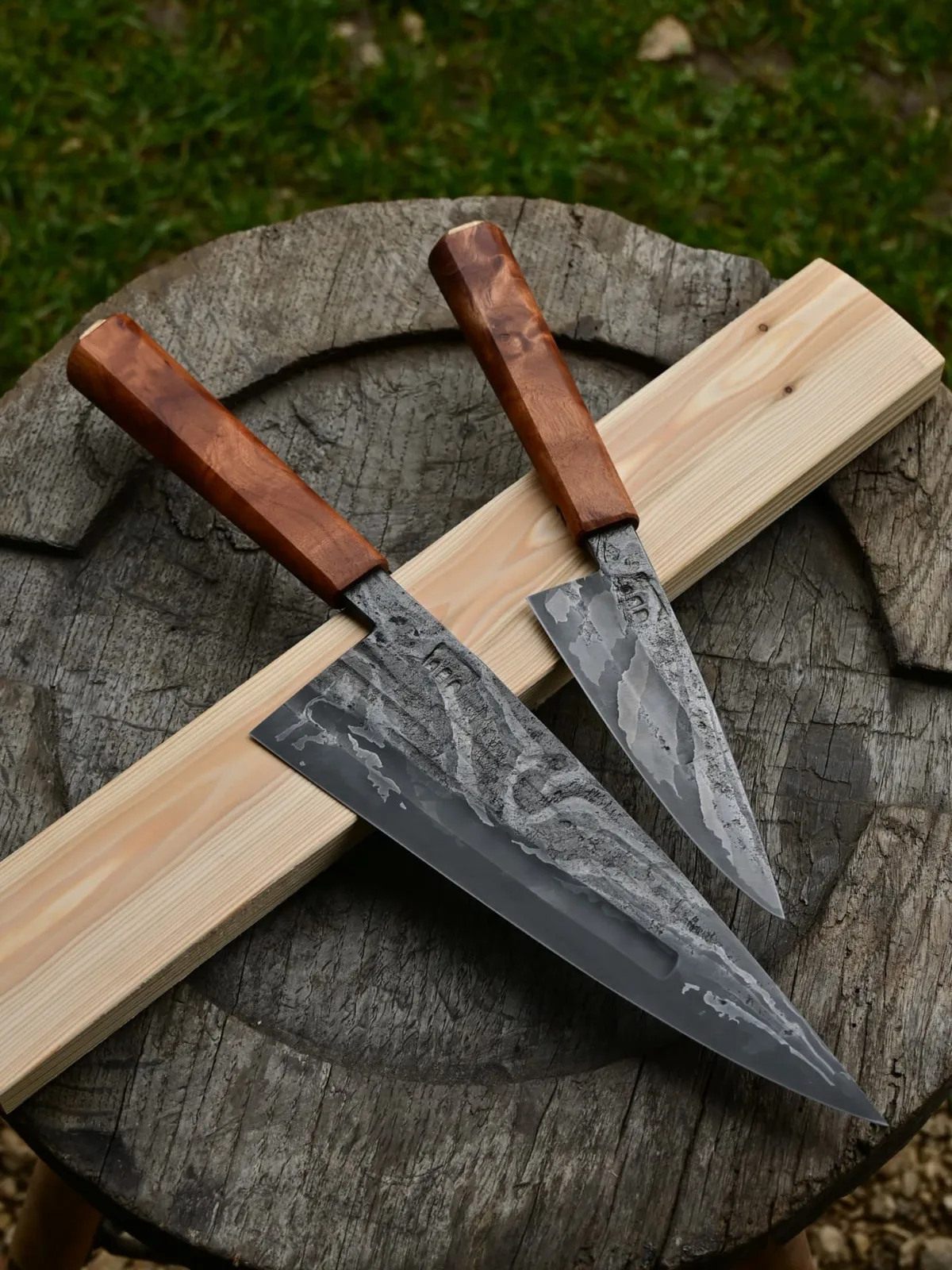
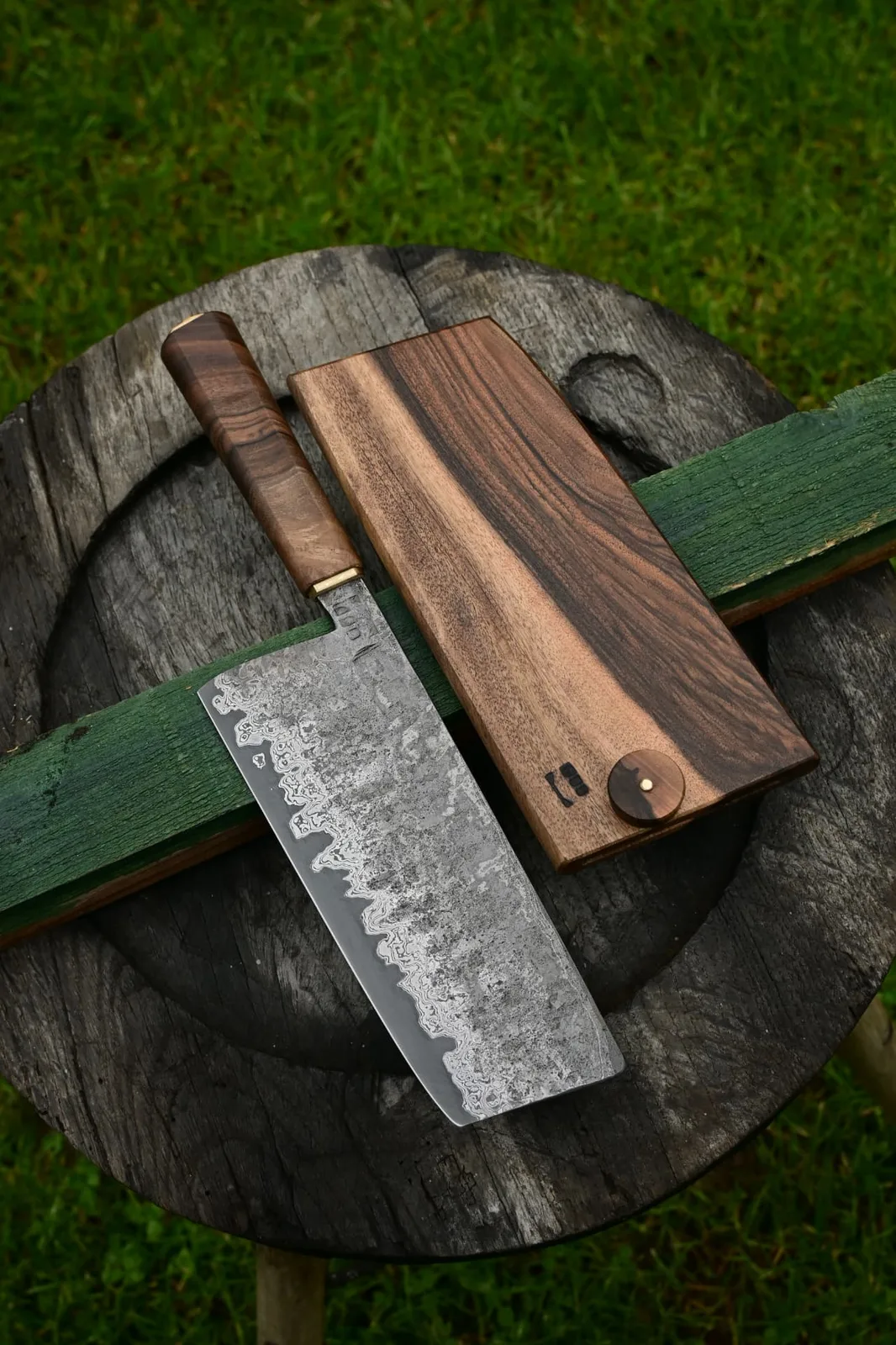
Into the world of smithing, with tradition and quality.
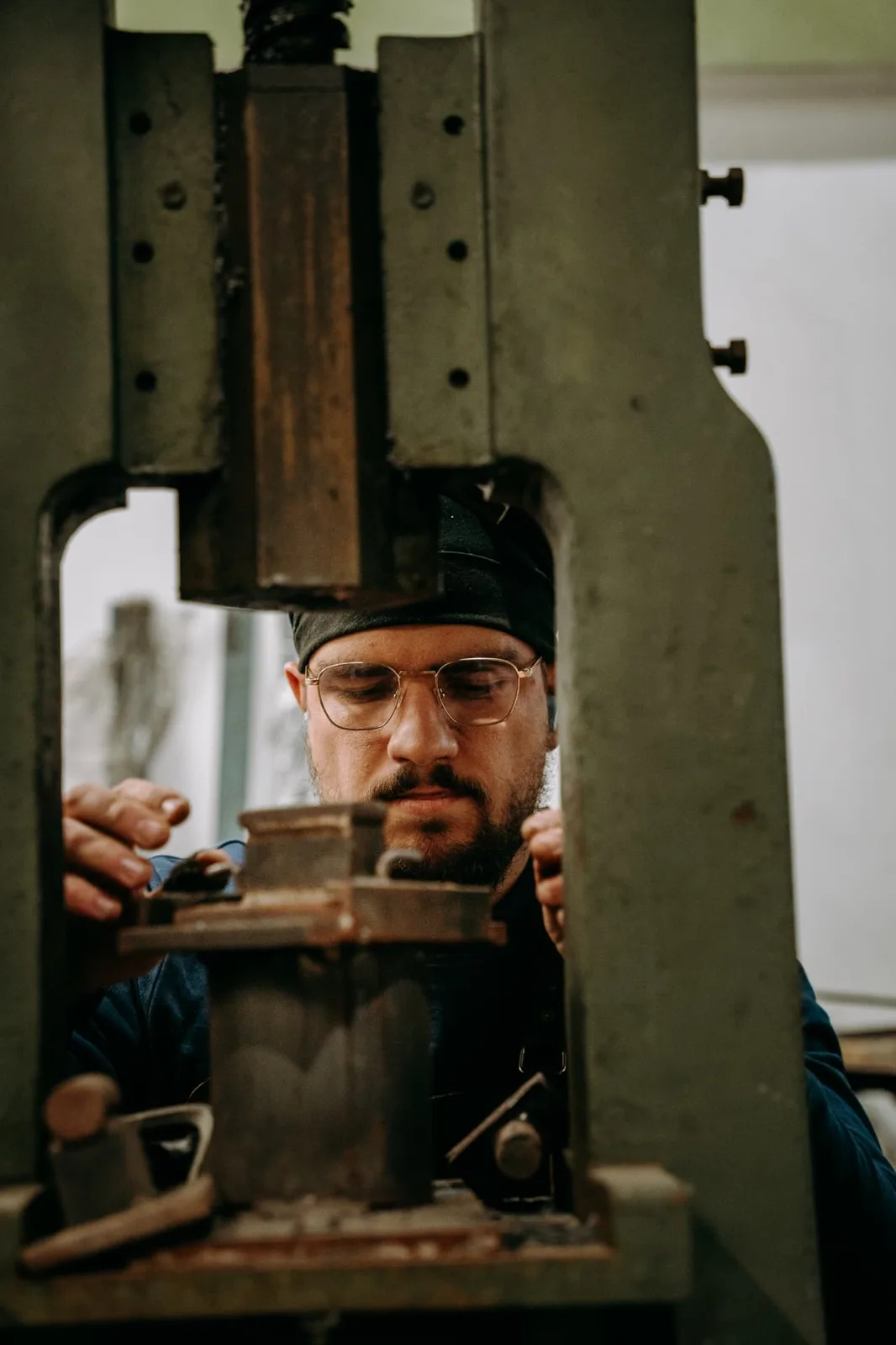
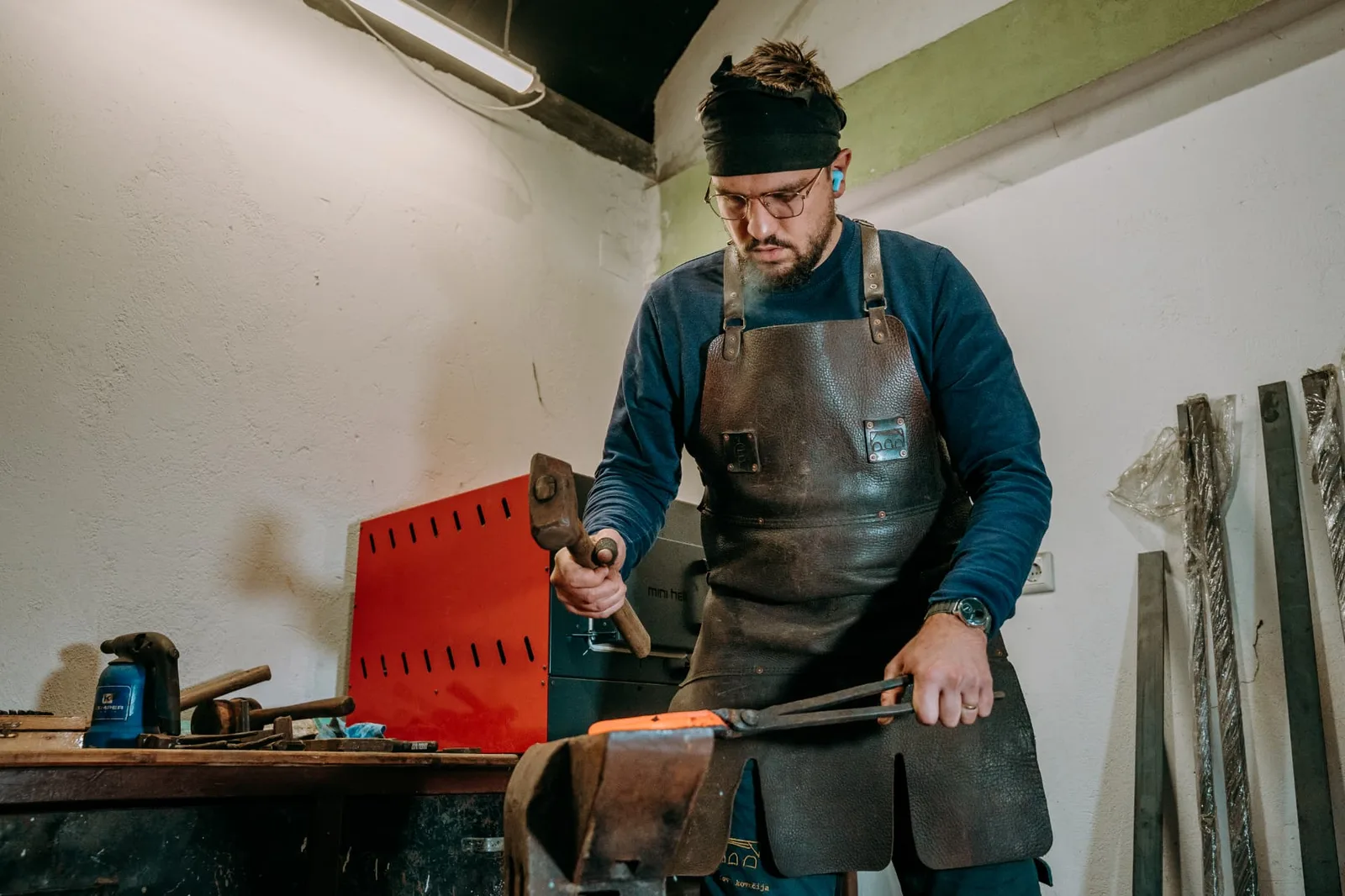
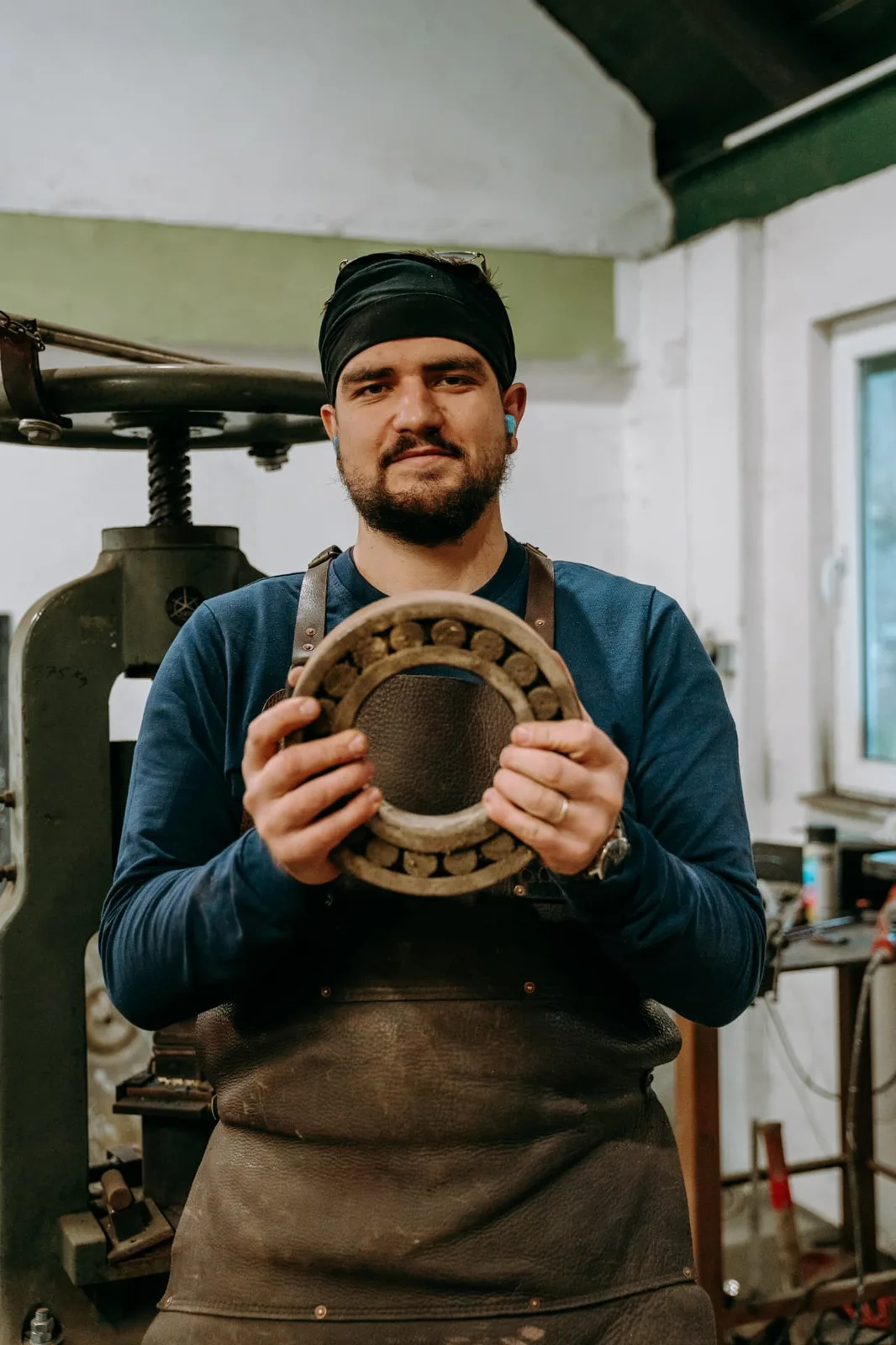
I am Lovro Jurečič, a blacksmith from Podbočje.
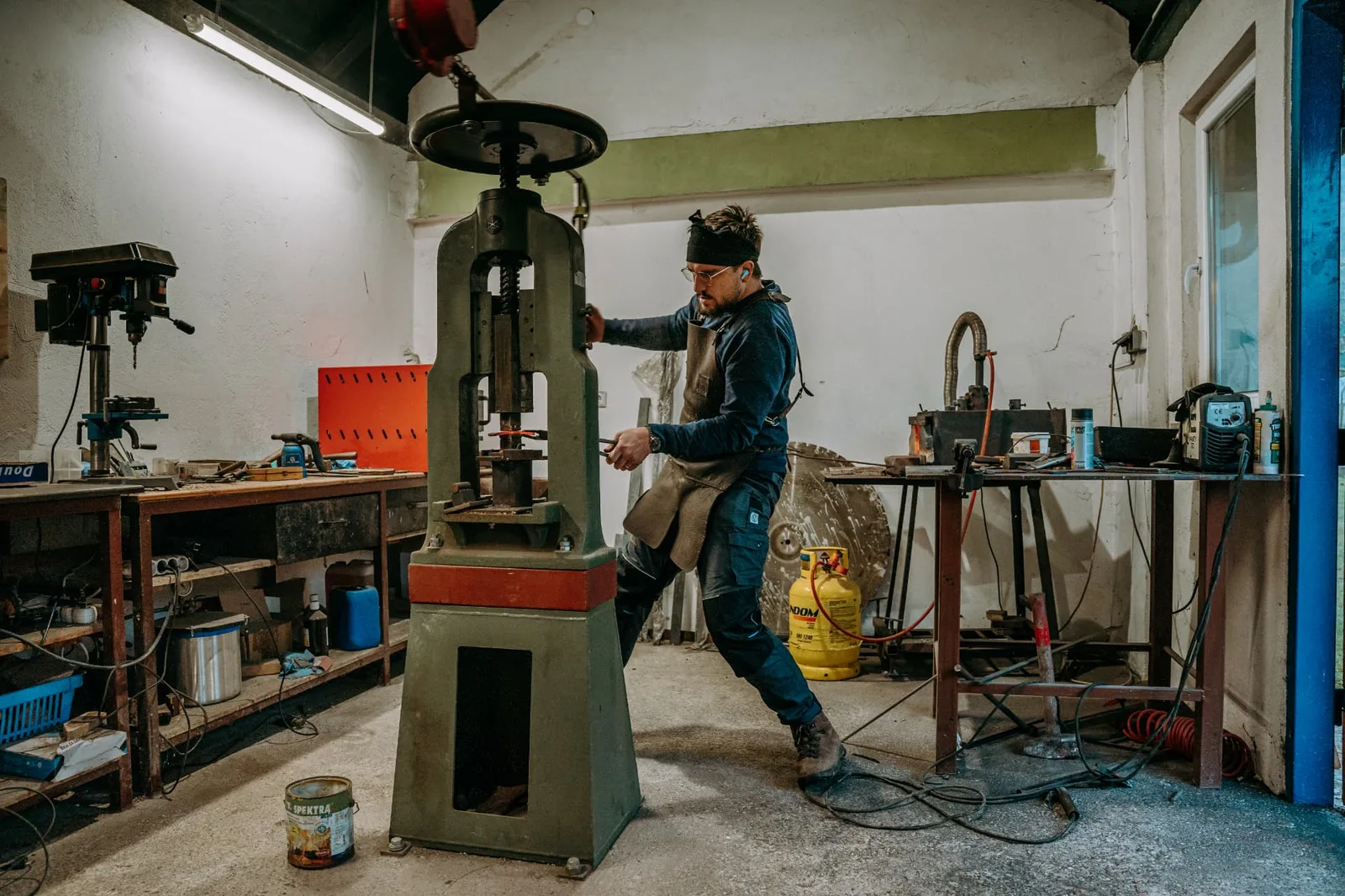
My great-grandfather was a smith as well, and his knowledge reached me through my grandfather. I began making knives in 2019, hoping to make something useful, something well made and, in the end, something beautiful. Along the way I found that a knife can carry a story — the traditions of this place, which are close to my heart.
Out of all that curiosity came Vorančeva kovačija: tradition, quality and handwork, multiplied together.
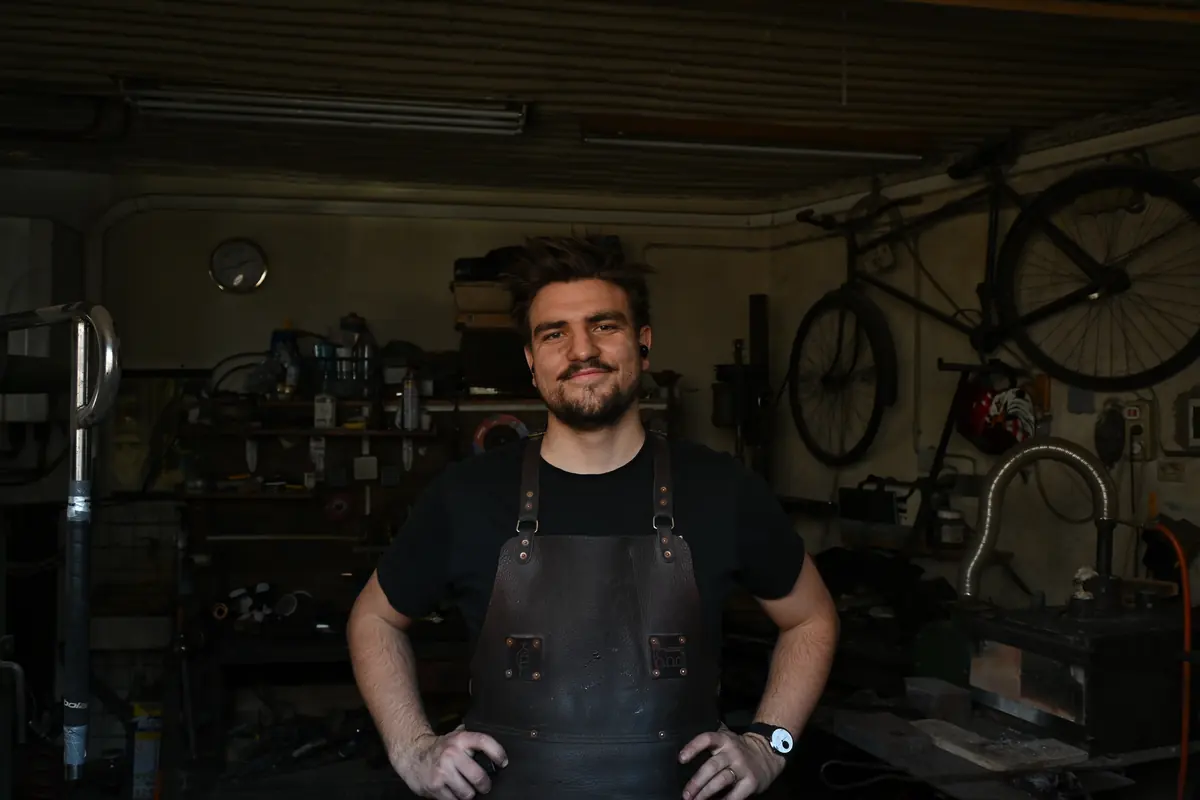
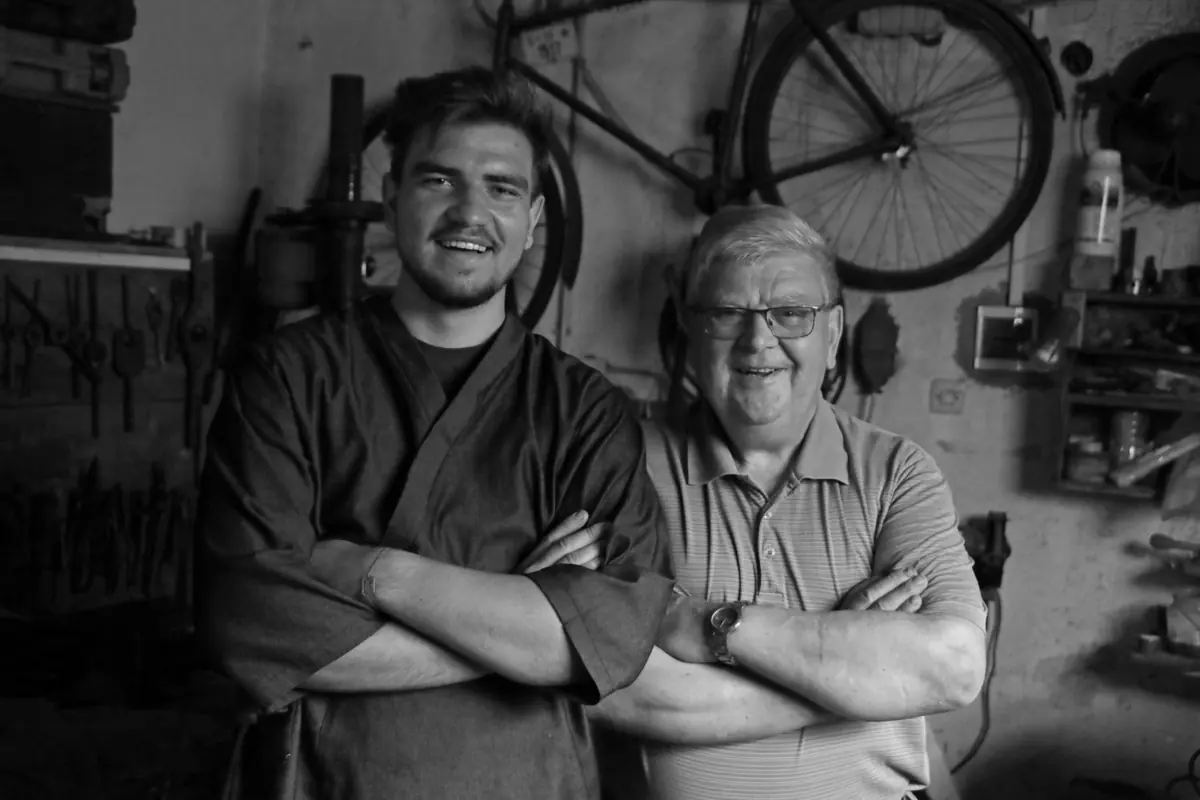
This is my grandfather.
Grandpa Franci is a treasure in every possible sense. He is my adviser, my harshest critic, my teacher and a remarkable friend. We set out on the smith’s road together. Without him I would most likely have given up long ago, or my work and my technique would be half as good as they are today. We make things together, day after day. Sometimes we sit in front of the house and work out what ought to be changed and improved — or simply when the grapes will ripen and what grandma is cooking today. He is modest and will never admit it, but he is the load-bearing pillar of Vorančeva kovačija.
Grandpa is, quite simply, a great blessing in my life.
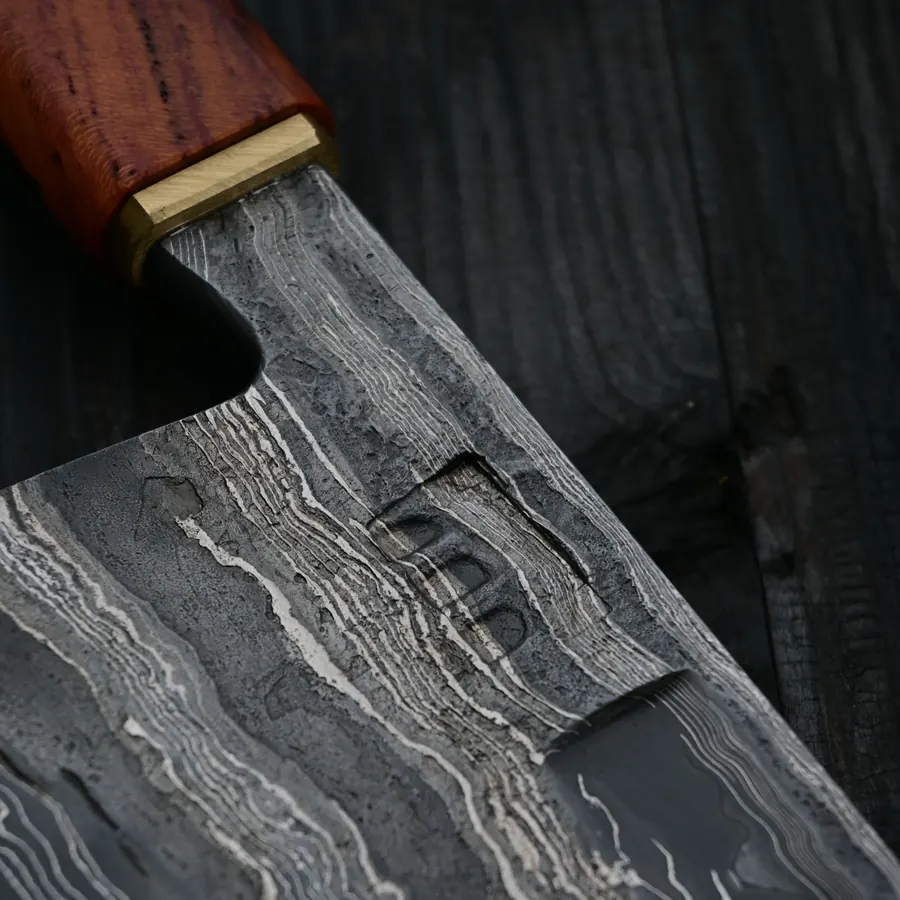
Napoleon’s bridge
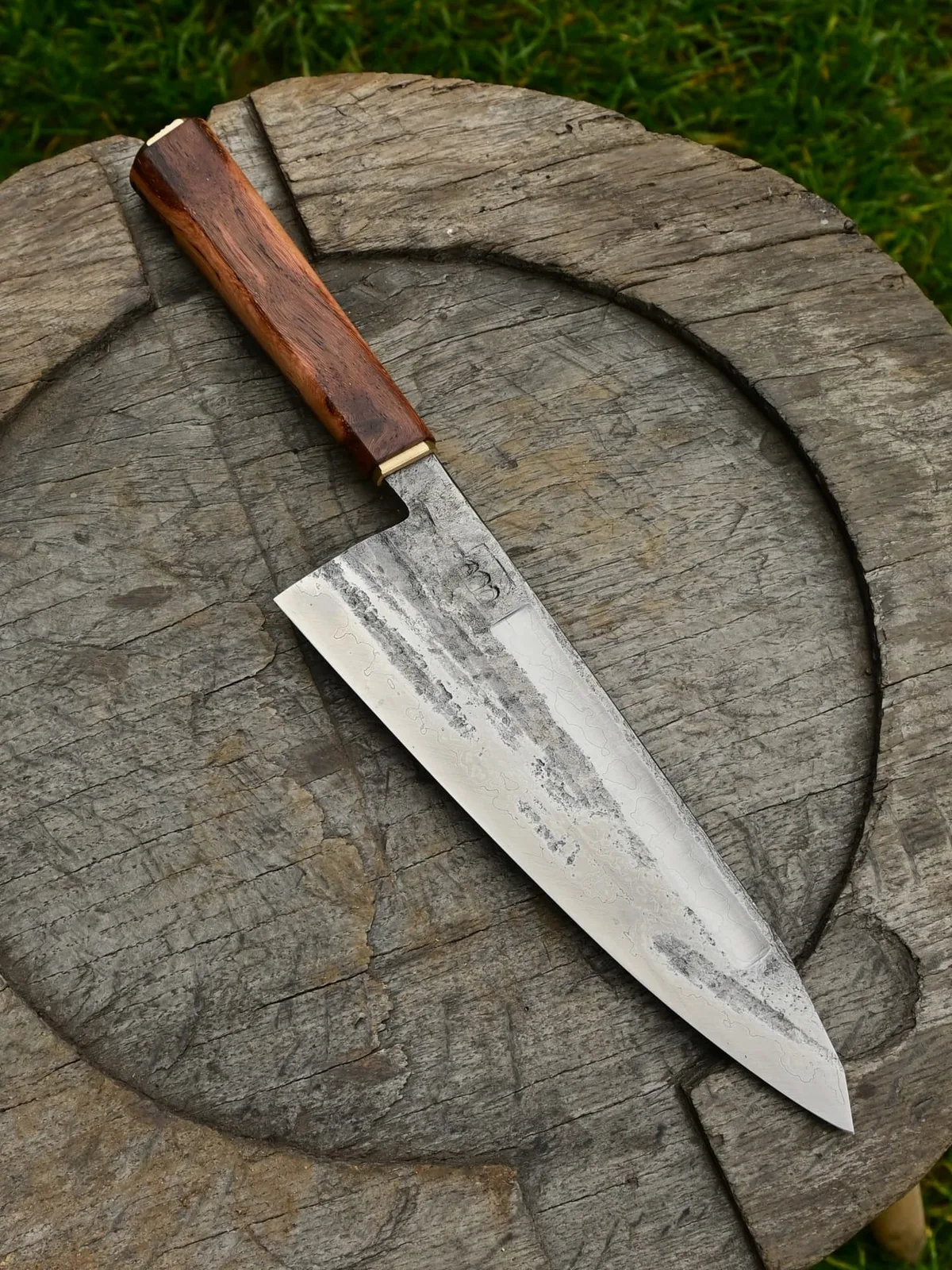
My logo, or mark, is a simple piece of reasoning. Thirty metres from my home stands a three-arch stone bridge that locals like to call Napoleon’s bridge. His soldiers, who passed through these parts at the time, are said to have built it, because the Sušica torrent caused no end of trouble in bad weather. (Believe me — my house has been flooded three times.) A stone bridge that has so plainly passed the test of time is an excellent symbol for my principles as a craftsman: a wish for quality, precision and durability. The bridge also stands for the bridge between the generations that tie me to this trade. And in the end, I drive across it into the world almost every day.
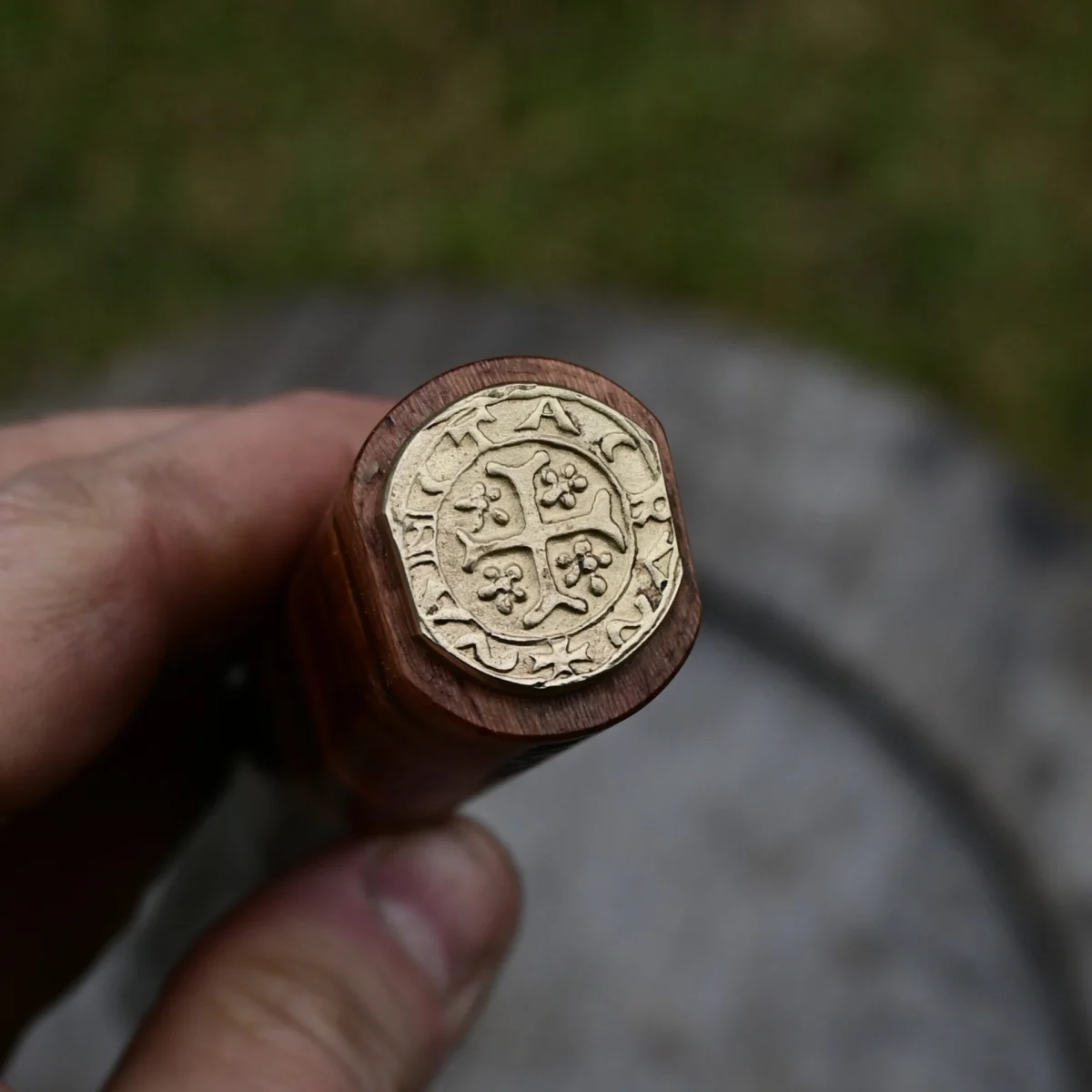
The “Sancta Cruz” coin
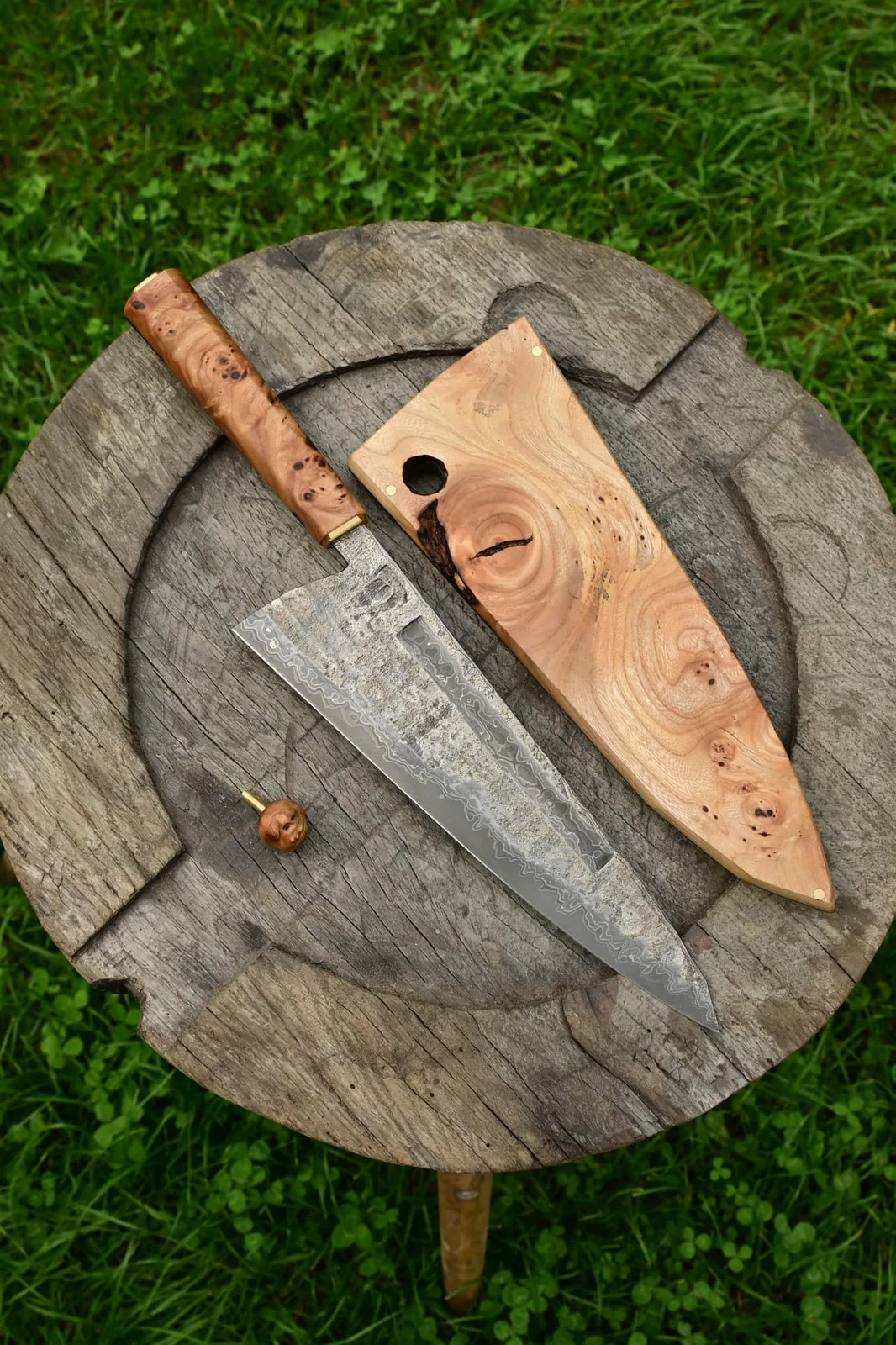
The village of Podbočje, where I grew up, plays a part of its own. The surroundings are kind, the people close-knit and full of good stories. This place of little bridges, with a church far too large for a village its size, has an extraordinary history. In the 12th century it was home to lords who kept a treasury on the hill of Stari grad. A coin was found there bearing the words “Sancta cruz” — Holy Cross — still the patron of our parish today. In passing you may hear a local call himself a “Krževec” rather than a “Podbočjan”. In the past the village was called Sveti križ, Holy Cross. At the end of every handle you can see a forged impression of that coin.
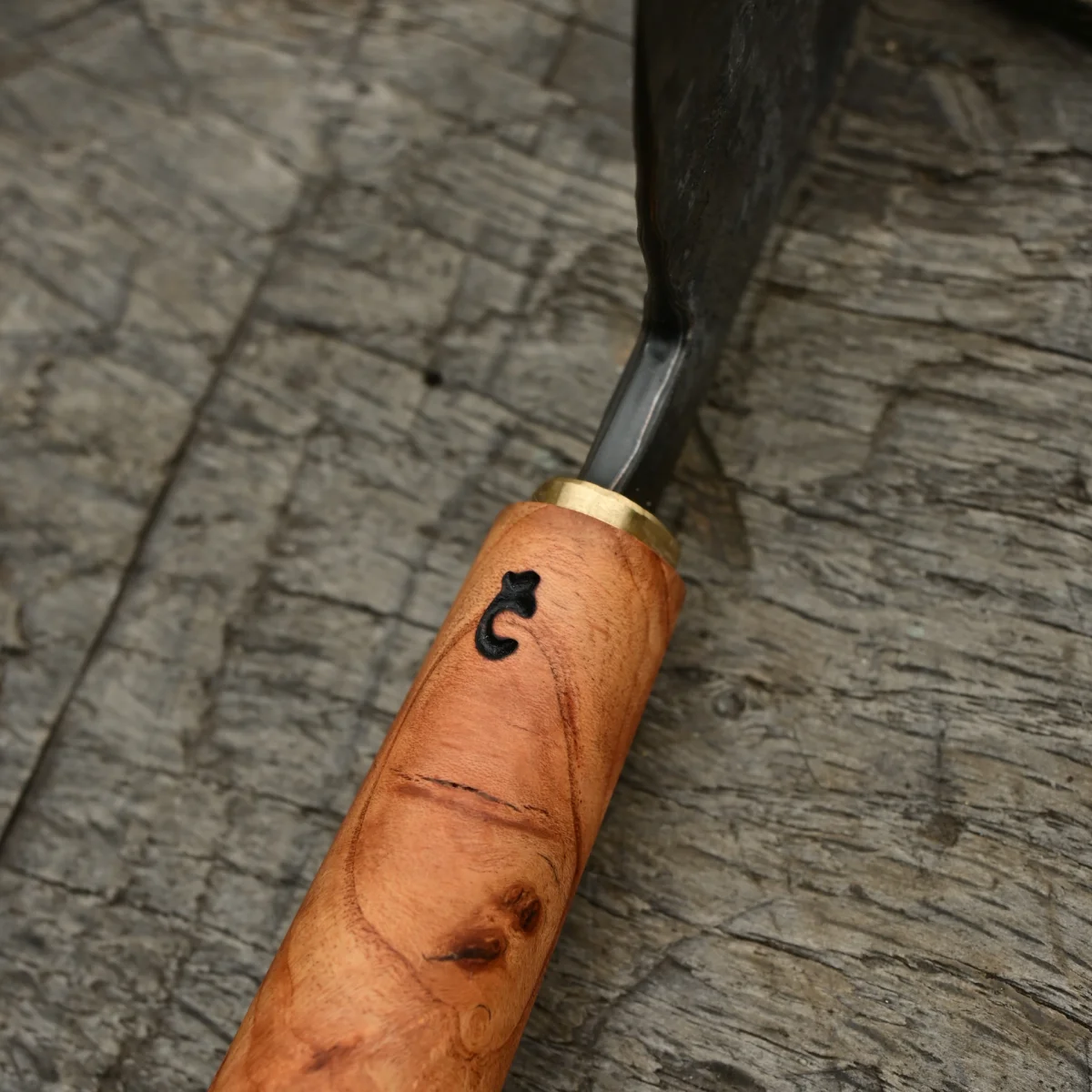
The letter “Č”
The letter “Č” appears twice in the name Vorančeva kovačija. Once for my great-grandfather and once for my grandfather. Without the two of them there would be no forge, and you would not be reading this page. Although I never knew my great-grandfather, a part of him has carried on through me. Family matters a great deal to me, and in the old trades, where knowledge passes from one generation to the next, those bonds show all the more. So I stamp the letter “Č” into every handle as a tribute to my forebears, in the hope that the tradition will continue through me and through those who come after.
From the workshop, as it happens
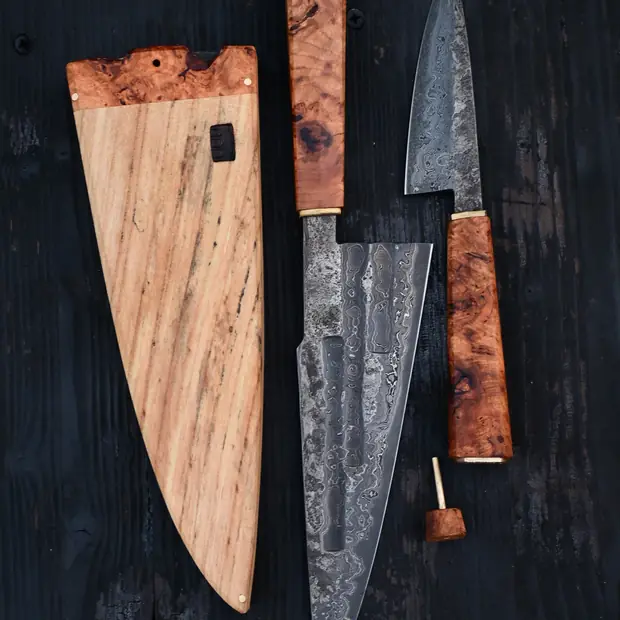
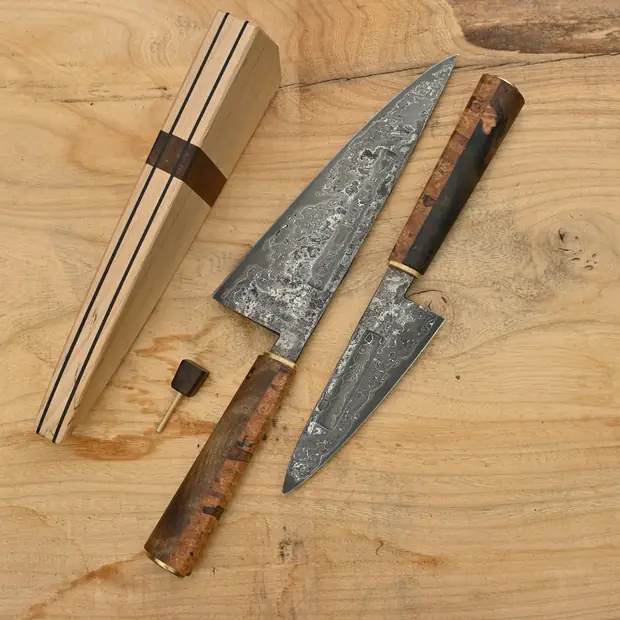
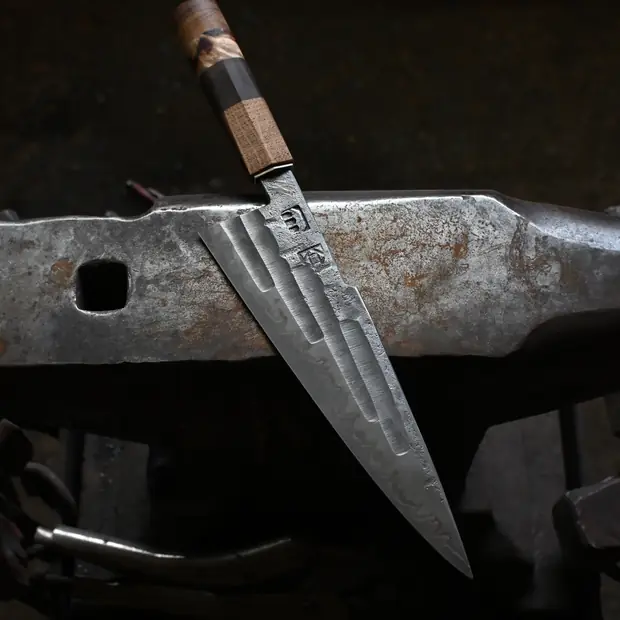
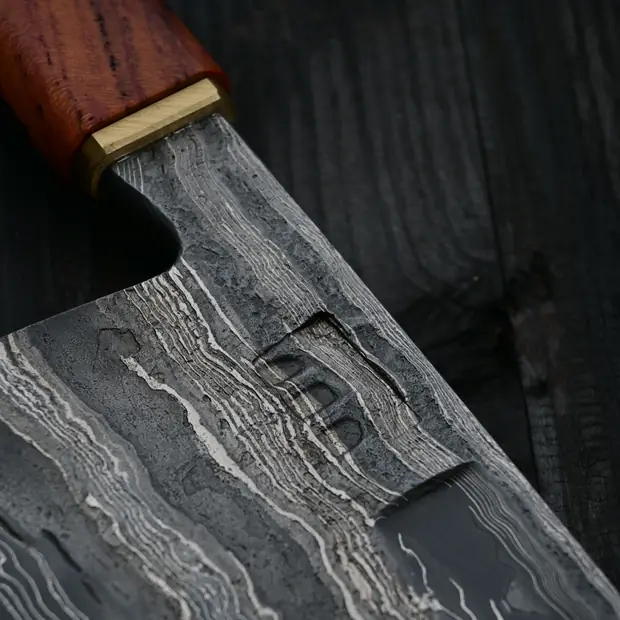
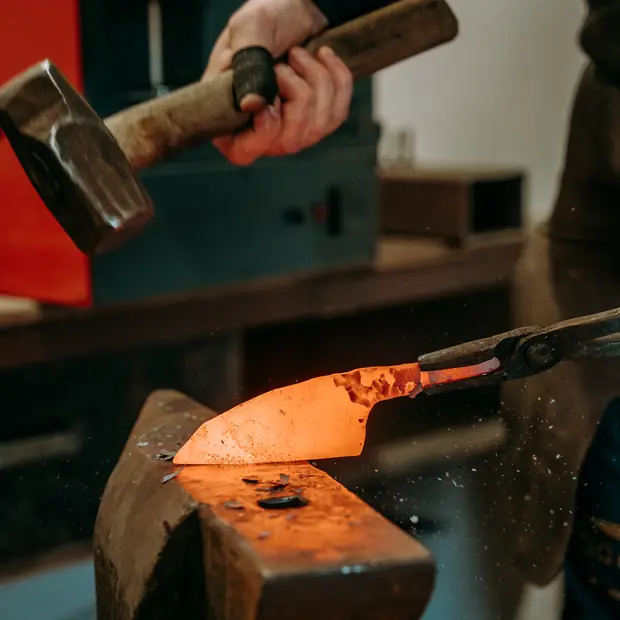
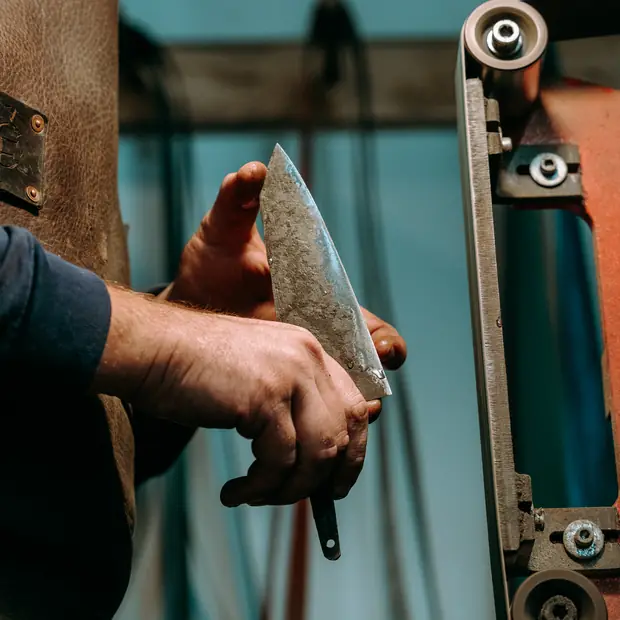
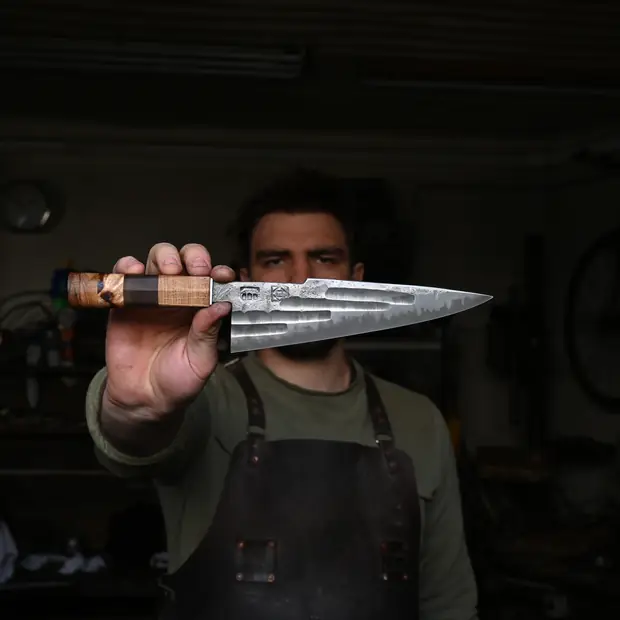
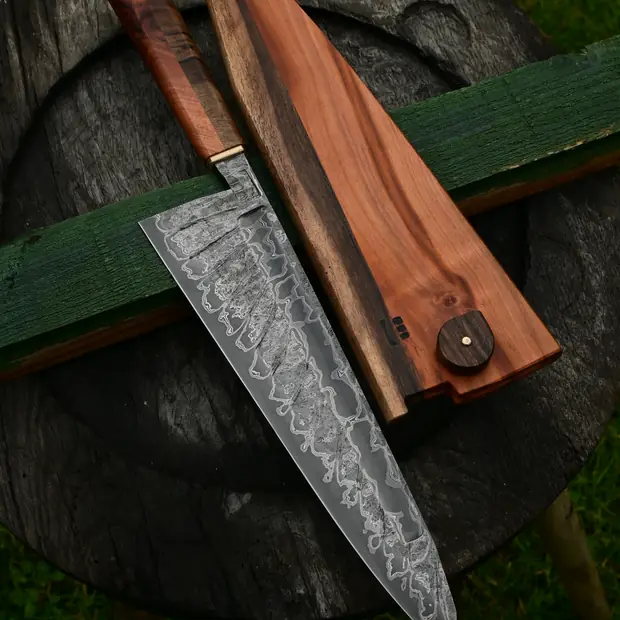
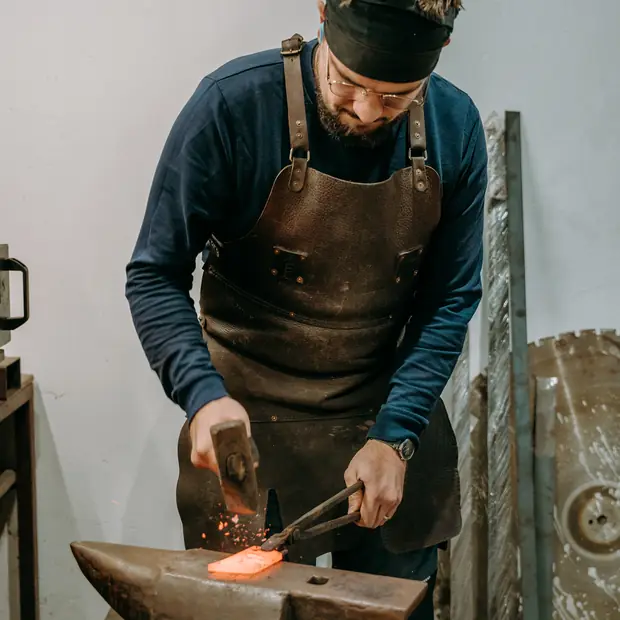
These are stored photographs. Once the source is set, the gallery reads straight from Instagram.
A knife that lasts decades
The knife is made of carbon steel, which means it can begin to rust after prolonged contact with water. Avoid this by simply wiping the knife with a dry cloth after use, and every so often applying a thin coat of oil and wiping it again. In time a patina will form, which happens when metal meets acids (tomato, lemon…). There is nothing wrong with that: the patina gives the surface further protection against rust. Never wash the knife in a dishwasher — it can damage the whole knife.
Do not touch hot surfaces with the knife and do not heat it (carving a pork roast is of course no trouble). Heating draws the temper from the steel, which means it loses hardness and with it the edge — and that cannot be undone.
The knife is sensitive to impact against objects harder than itself (glass, bone, ceramic). Its high hardness also means greater brittleness. Dropped on its edge, the knife can chip. There is no need to fear it cracking while you cut a pumpkin on a board.
The edge will hold far longer than on an ordinary knife, so sharpening is not needed before every use. The knife is best sharpened on water stones; I recommend grits between 2000 and 5000. Do not use cheap gadgets promising “easy, perfect and fast sharpening” — you will ruin the edge!
Store the knife somewhere dry and away from possible sources of heat. Wrap it in a cloth or something similar so it does not meet other hard objects, and put it away for later use (as they did in the old days).
As the maker, I am here for any question about using and caring for the knife. If rust builds up, or the knife is damaged in some other way, you can bring it in for repair or maintenance. I will repair it, regrind it and put a fresh edge on it. The knife will be as good as new.
Reserve your knife
If you would like to order a knife or a piece of jewellery made to measure, get in touch:
- E-mail: voranceva.kovacija@gmail.com
- instagram: voranceva_kovacija
- telefon: 031 696 197
If you would rather buy a knife sooner, , where a knife is available each month. You will receive a photograph of the knife, its details and the price by email.